
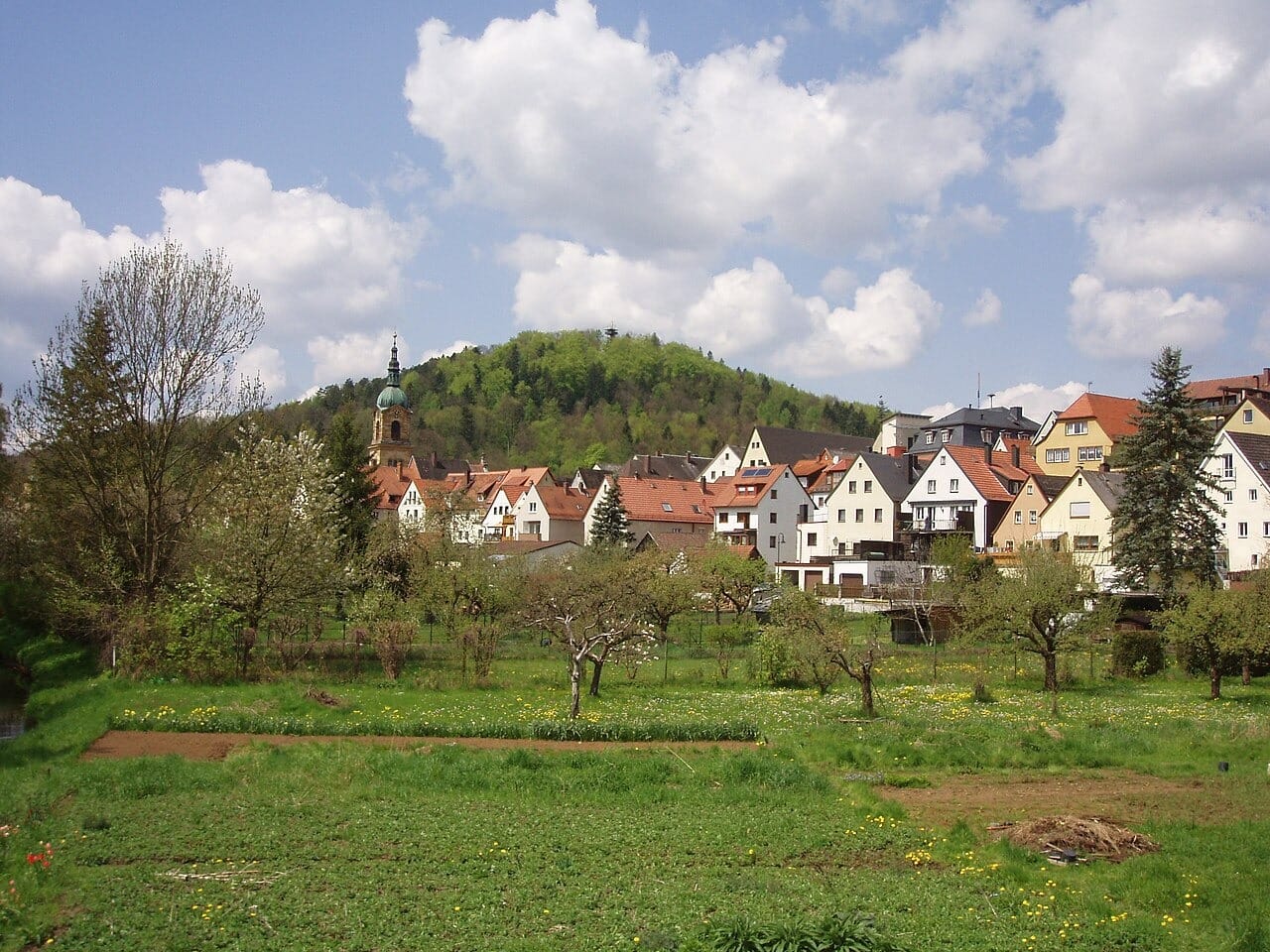
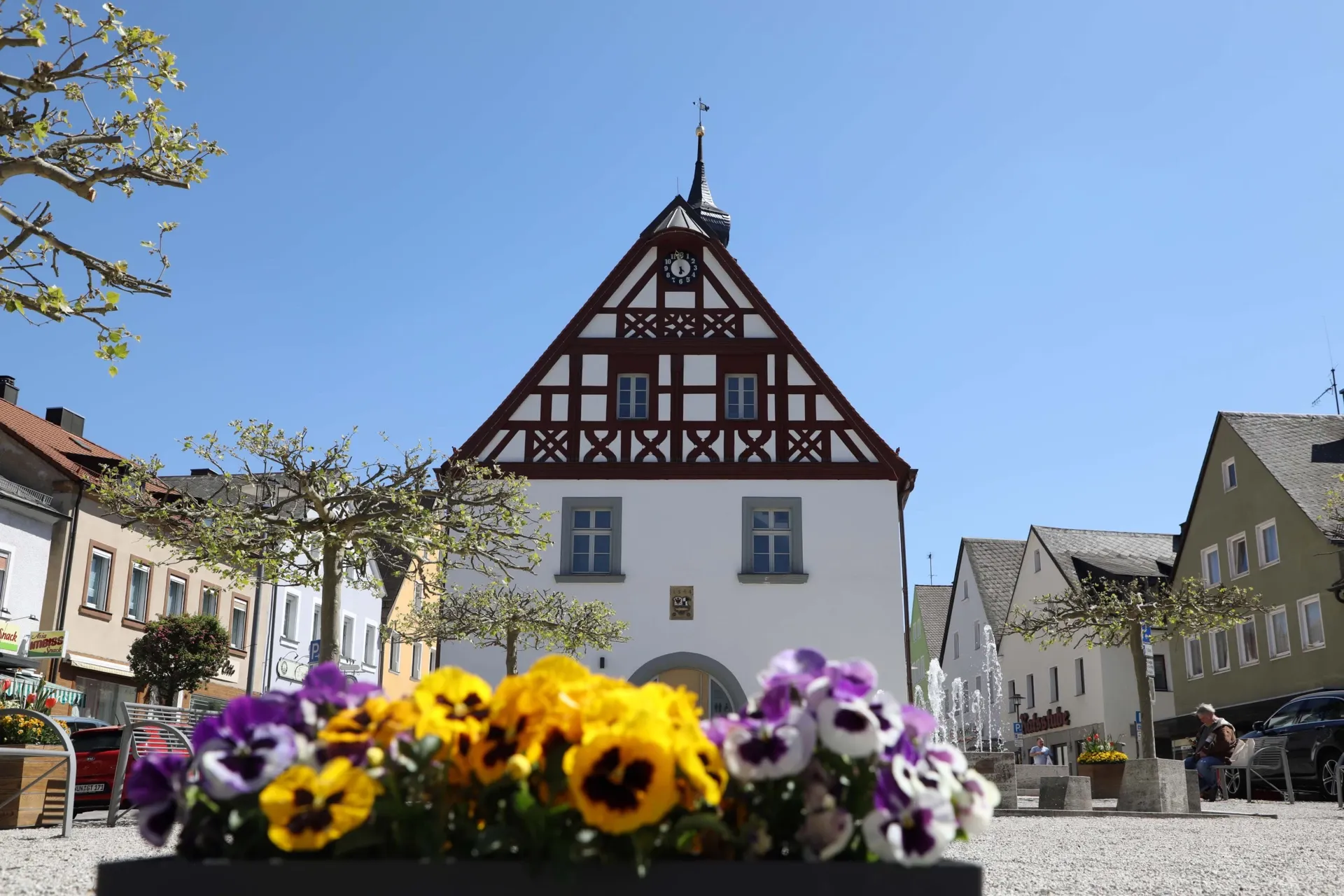
Pegnitz is an industrial town at the gateway to Franconian Switzerland: compact in scale, economically strong, and culturally distinct. About 13,600 people live here, in the Bayreuth district and the Nuremberg metropolitan region, where Pegnitz serves as the southern district's economic hub. Its history traces back to former mines and the Pegnitzhütte ironworks. Today engineering and metalworking sit alongside a textile industry as the town's economic base.
Civic life carries the town's character just as much. Pegnitz hosts summer concerts and seasonal fairs, though Gregori-Fest stands apart: a children's festival with a thousand-year tradition, listed as intangible cultural heritage in Bavaria. The municipality's Pegnitz 2030 strategy extends this civic focus into economic and infrastructure planning, including job support, town-center development, and the energy transition.
That growth reached the administration's own IT operations too. Under a heavier workload, the team's file-based system for managing access could no longer keep up, and they began looking for a self-hosted alternative built for multiple administrators working at the same time.
Location: Bavaria, Germany
Industry: City administration
Company size: 160+ employees
The challenge: File-based sync conflicts slowed down a small IT team
Stadt Pegnitz's IT infrastructure is managed by the municipality's IT department. Before switching to Passwork, the team used an open-source, file-based password vault to store credentials for the municipality's servers, network switches, and firewalls. The tool worked well as a personal vault, but it wasn't designed for concurrent multi-user access, and that limitation showed up daily.
A small team covering an entire municipal network has little room for tools that add coordination overhead. This friction pushed Pegnitz to look for an alternative.
The single database file couldn't handle more than one administrator opening it at once without risking a merge conflict. In practice, this meant one administrator asking another, "Are you in the vault right now?" before making any change, to avoid overwriting a colleague's update.
The old setup created several compounding problems:
- Every edit required verbal coordination to avoid overwriting a colleague's changes
- Outdated database copies could circulate if someone forgot to redistribute the latest version
- No role-based permission model meant granular access control wasn't possible
Any file-based vault synchronized manually or over a shared network drive runs into the same limits once more than one person needs write access. A tool that works well for a single administrator creates a coordination problem once a second person joins.
The solution: Passwork met Pegnitz's requirements without the enterprise overhead
Pegnitz needed a single source of truth for infrastructure credentials, without file-based sync and without the overhead of an enterprise-scale deployment.
"As a compact IT team, we need tools that make our work easier, not add administrative burden. Passwork has made our daily infrastructure work more secure and much faster." — Stadt Pegnitz IT team
The search, conducted through IT forums and open-source communities, focused on four requirements that Passwork's interface and deployment model met directly:
- Self-hosted, on-premise deployment, to keep credential data under the municipality's control
- Client-side encryption, so data never reaches the server unencrypted
- Multi-user access with no file locking
- A reasonable price-to-value ratio, since the team had no interest in paying for enterprise features it wouldn't use
Passwork's interface, built around administrators' actual workflow rather than a consumer-style vault retrofitted for teams, was the main reason it stood out during evaluation.
Deployment and migration: A fast rollout without data loss
Two factors made Pegnitz's evaluation quick:
- Docker-based deployment, which let the team test the full feature set without a lengthy setup process
- A lossless migration from the team's existing vault
Together, these addressed the two biggest risks in any password manager switch: extended downtime during rollout and data loss during the move.
Migration from the previous file-based vault went through cleanly using Passwork's built-in import function, carrying over years of accumulated credential data without loss.
Results: Faster daily workflow, no coordination overhead
Passwork removed the coordination step that used to precede every password edit at Pegnitz. Changes now sync to the whole team in real time, so the "are you in the vault?" conversation is gone. The browser extension cut time spent on routine logins, and centralized credential rotation replaced the old manual process of updating local copies one by one.
The security gain matched the productivity gain. With credentials centralized and role-based, the IT team no longer needs to track down which local vault copy is current before rotating a password on a server or firewall.
Conclusion

Pegnitz's IT team faced merge conflicts and constant verbal coordination every time more than one administrator needed to edit the shared credential vault. They solved it by moving to Passwork, a centralized, self-hosted vault with real-time multi-user access and role-based permissions.
As a result, the team eliminated file-locking conflicts entirely and cut the time spent managing routine credential changes.
"Most importantly, we no longer have to check whether someone else is working in the vault before making a change. We can work in parallel without conflicts. For us, Passwork is the ideal self-hosted solution." — Stadt Pegnitz IT team
 Alex Muntyan
 Passwork Team
 Alex Muntyan
Table of contents
Table of contents

Self-hosted password manager for business
Passwork provides an advantage of effective teamwork with corporate passwords in a totally safe environment. Double encryption and zero-knowledge architecture ensure your passwords never leave your infrastructure.
Learn more